Why is a Continuous Emission Monitoring System (CEMS) essential for the pesticide industry?
Pesticide manufacturing involves complex chemical processes that can release harmful air pollutants. Some are harmful for the environment and public health, including VOCs, SOx, NOx, and particulate matter. Given the high regulatory scrutiny and environmental risk, Continuous Emission Monitoring Systems (CEMS) are essential for real-time tracking and control of emissions. CEMS does not only support compliance with strict environmental norms but also help improve operational efficiency, protect workforce health, and reinforce sustainable manufacturing practices. These features make CEMS a critical investment for the pesticide industry.
High-risk emissions unique to pesticide production
Pesticide manufacturing involves synthesis, blending, distillation, and waste treatment processes that emit volatile organic compounds (VOCs), acid gases (such as HCl and HF), ammonia, and other hazardous air pollutants (HAPs). These emissions risk the health of workers and surrounding communities, and contribute to air and soil contamination. For instance, VOCs released during solvent recovery or blending can lead to respiratory problems and are often flammable, requiring strict control.
CEMS allows for the round-the-clock monitoring of such emissions, giving plant operators an accurate and timely picture of the pollution load at each stage of production. This helps ensure that emissions remain within safe limits while reinforcing trust among regulators and the public.
Tightening compliance standards and regulatory expectations
India’s Central Pollution Control Board (CPCB) and State Pollution Control Boards have strengthened air quality regulations in line with international environmental protocols. Facilities in red-category sectors like pesticide manufacturing are under increasing scrutiny. CEMS plays a crucial role in abiding by these compliance norms. Automated data reporting, as mandated under the CPCB’s Emission Monitoring Guidelines, enables real-time data submission to authorities. This ensures transparency and helps companies avoid penalties, shutdowns, or delays in licence renewals.
Real-time monitoring for incident prevention
Pesticide plants operate in high-risk environments where sudden emission spikes can indicate equipment malfunctions or process irregularities. From a scrubber failure or an unexpected reaction spike, CEMS enables immediate detection and alerts, allowing operators to take swift corrective action. Such responsiveness prevents permit breaches, uncontrolled releases, and accidents that could lead to significant environmental and reputational damage.
Process optimisation through emission data analytics
Beyond compliance, CEMS offers valuable operational insights. By analysing emission trends, plant managers can optimise combustion settings in incinerators or adjust reaction parameters to minimise gas release. For example, fine-tuning furnace temperature based on NOx data can reduce both emissions and fuel consumption. A real-time data-driven decision-making enhances production efficiency and reduces variability between production batches.
Ensuring workplace safety in hazard-prone zones
Certain areas of pesticide plants—such as near reactors, scrubbers, and solvent storage—are highly vulnerable to toxic gas leaks. CEMS supports continuous tracking of hazardous gases like chlorine, hydrogen sulphide, or ammonia, maintaining safe working conditions and preventing exposure risks to personnel. In safety-sensitive industries, such systems are not just an option, but a necessity.
Looking for effective CEMS analysers?
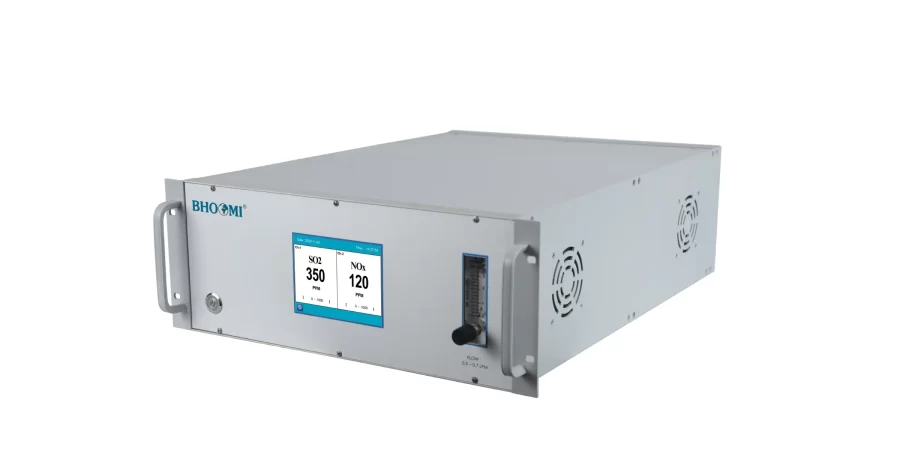
Explore the CEMS solutions from Bhoomi. They provide a wide range of CEMS products that are highly functional and effective. For instance, Agasthya 2013 Series Continuous Emission Monitoring System BI 7000 NDIR is designed to monitor and analyse multiple gas pollutants. It has an advanced sensor technology that can detect harmful gases like CO, NOx and SO2. You can also explore the Integrated Continuous Emission Monitoring System with SCU & Heated Probe & Sample Tubing – it is a comprehensive solution for real-time monitoring of gaseous pollutants. It is known for the user-friendly interface and modular design having scalable ranges for customised monitoring needs.