The impact of dust monitoring system on mining and cement industries
India’s rapid industrial growth has driven massive expansion in the mining and cement sectors. These industries, vital for infrastructure and economic development, face increasing scrutiny over their environmental footprint. Among the primary concerns lies the issue of air pollution, particularly the release of particulate matter (PM) into the atmosphere. Dust emissions from mining and cement production affect not only environmental quality but also human health and operational efficiency. Here, we share some of the useful insights on the importance of dust monitoring systems in the mining and cement industries.
Understanding dust emissions in mining and cement sectors
Both mining and cement operations involve several processes that generate significant dust. In mining, activities such as drilling, blasting, material handling, and transportation release airborne particles. Similarly, the cement industry produces dust during raw material extraction, grinding, kiln operations, and packaging.
These dust particles, particularly PM2.5 and PM10, pose serious health risks. Workers exposed to high dust levels face respiratory problems, skin irritation, and long-term ailments such as silicosis. Moreover, communities residing near mining or cement plants often report increased instances of asthma, bronchitis, and other pulmonary diseases.
The role of dust monitoring systems
Dust monitoring systems provide continuous, real-time data on ambient particulate levels. These systems typically include sensors, data loggers, and software platforms that measure the concentration and composition of airborne particles. Through accurate detection, they help industries understand emission patterns and identify critical sources of dust.
Advanced systems also enable automated alerts when dust levels exceed permissible limits. This feature allows for timely corrective actions.
Regulatory framework in India
The Central Pollution Control Board (CPCB) in India has laid down strict guidelines to control air pollution from industrial activities. Industries must adhere to the National Ambient Air Quality Standards (NAAQS), which define acceptable levels of PM2.5 and PM10.
To enforce compliance, the Ministry of Environment, Forest and Climate Change (MoEFCC) mandates installation of Continuous Emission Monitoring Systems (CEMS) in highly polluting sectors, including mining and cement. Non-compliance can attract heavy penalties, closure notices, or revocation of operational licences.
Operational advantages for industries
The benefits of dust monitoring systems extend beyond regulatory compliance. One of the key advantages is the optimisation of dust suppression methods. For example, mining companies can use real-time data to adjust the use of water sprays or dust suppressants only when necessary. This saves resources and reduces costs.
In the cement industry, monitoring systems support better maintenance planning. By identifying dust hotspots within the plant, managers can schedule timely repairs or upgrades. Furthermore, dust monitoring improves workplace safety. A cleaner environment results in fewer health-related absences.
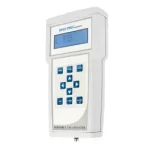
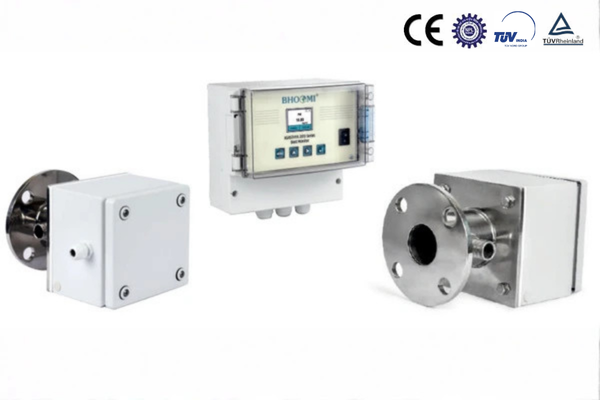
As awareness of environmental issues grows, dust monitoring products will become integral to industrial operations. For instance, our Agasthya 2013 Series Dual Pass Transmissometer Dust Monitor BI 7000 provides in-situ measurement of particulate concentration in industrial exhaust gas. It uses double pass optical transmission technology, where a light beam travels across the stack, reflects back, and gets measured for intensity loss. This loss directly correlates with dust concentration and can be displayed in mg/m³. Features like an air purge system and MODBUS connectivity make it a reliable choice for continuous stack monitoring in mining and cement industries. With no moving parts and long-life green LED optics, it balances precision and durability, offering Indian industry a cost-effective solution for regulatory and operational excellence.
We also offer other dust monitoring products such as Agasthya 2013 Series Triboelectric Dust Monitor BI7000, which is used for detecting particulate leaks in industrial dust collection systems like baghouses and cyclones. It relies on the triboelectric principle, where a probe inserted into the gas stream senses particles by their electrical charge as they pass by.