Role of biogas analyzer at different stages in biogas production
Biogas is evolving as an increasingly important energy source for industries aiming to reduce carbon emissions and lower energy costs. But producing high-quality biogas isn’t just about the feedstock or the digester—it’s about having the right tools to monitor and control the process.
A biogas analyser plays a critical role at every stage of production. From checking the quality of incoming materials to monitoring gas composition during digestion, accurate gas analysis is key to running an efficient and compliant operation. Here, we will look at how a biogas analyser supports different phases of the production cycle, and its contribution in improving performance and reliability in large-scale setups.
Overview of the biogas production process
Biogas production involves four main stages:
- Feedstock preparation: Organic materials are processed for digestion.
- Anaerobic digestion: Microorganisms break down the organic matter, producing methane (CH₄) and carbon dioxide (CO₂).
- Gas collection: The biogas is captured in sealed containers.
- Gas upgrading/storage: Raw biogas is purified to meet standards for CHP units or grid injection.
Biogas analysers are integral at each stage to ensure optimal performance and quality.
Importance of real-time gas analysis
Real-time monitoring is essential for maximising efficiency and meeting safety standards. Immediate detection of gas fluctuations such as methane, hydrogen sulphide (H₂S), or carbon dioxide allows for quick corrective actions, preventing issues like unsafe gas levels or system downtime. This ensures the biogas system operates smoothly and safely.
Role of biogas analyser at key stages
- Pre-digestion (input feedstock monitoring): Before digestion, biogas analysers help assess feedstock composition. Monitoring factors like nitrogen or lignin content allows for adjustments that optimise gas yield, ensuring efficient fermentation from the start.
- During Digestion (fermentation monitoring): During digestion, analysers track methane (CH₄), carbon dioxide (CO₂), and hydrogen sulphide (H₂S) levels. These measurements indicate microbial activity and process health. A drop in methane or rise in hydrogen sulphide can signal fermentation issues, allowing for timely intervention.
- Post-digestion (gas quality & purification stages): After digestion, raw biogas must be purified. Biogas analysers monitor H₂S, moisture, and other impurities to ensure the gas meets required standards for CHP units or grid injection. Monitoring prevents corrosion of equipment and optimises purification, improving both yield and equipment life.
- System safety & emission monitoring: Biogas analysers also ensure system safety by detecting potential issues like corrosion due to high H₂S levels or gas leaks. Emission monitoring ensures compliance with environmental regulations, avoiding penalties and promoting sustainability.
Looking for biogas analysers for your industry?
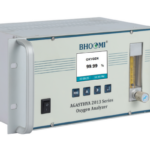
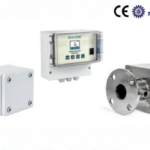
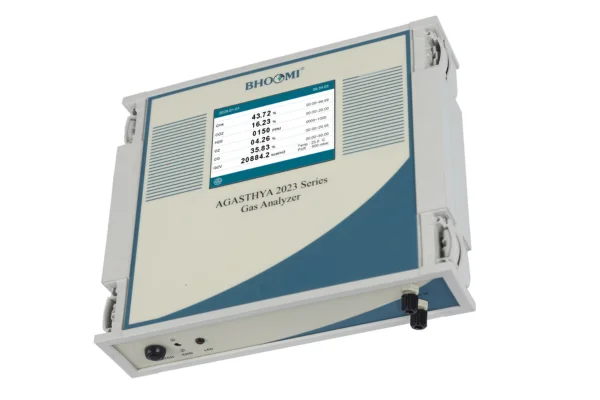
Explore our Agasthya 2013 series biogas analyzer BI 7110 that can measure gases such as CH4, H2s, CO2 and O2. Designed for operation in biogas plants and sites, our analysers can remove moisture and detect gas efficiently. It contains a built-in sample pump, pre-filter and flow metre. Our Agasthya 2013 series portable biogas analyzer BI 7120 is well known for its ability to monitor recovered and processed gases from landfill and biogas sites. It offers high efficiency as a portable biogas analyser and is easy to use and maintain. Maintain high work efficiency in your industrial set-up and maintain the vital components by detecting harmful gases on time.