Importance of SOX NOX monitoring in industrial kiln emissions
Whether used in cement production, ceramics, or metallurgy, kilns are at the heart of many industries. But they’re also a major source of emissions, and among the most concerning pollutants are sulphur oxides (SOx) and nitrogen oxides (NOx). These gases might be invisible, but their impact on the environment and public health is massive. Monitoring them isn’t just a regulatory requirement—it’s essential for running a responsible and sustainable operation. Here, we discuss the importance of SOX and NOX monitoring in industrial kiln emissions :
What are SOx and NOx?
SOx mostly refers to sulphur dioxide (SO₂), produced when fuels containing sulphur—like coal or oil—are burned. NOx includes nitric oxide (NO) and nitrogen dioxide (NO₂), formed during combustion at high temperatures.
Industrial kilns, especially those using fossil fuels or certain raw materials, release both SOx and NOx during normal operations. If left unmonitored or uncontrolled, these emissions can cause long-term harm.
The environmental impact
SOx and NOx are major contributors to acid rain. Once released into the atmosphere, they react with water vapour and fall back to the ground as acidic precipitation. This damages forests, acidifies rivers and lakes, and corrodes buildings and infrastructure.
NOx also plays a key role in the formation of ground-level ozone and smog. These pollutants reduce air quality, harm crops, and interfere with plant growth. SOx and NOx can also combine with other substances in the air to form fine particulate matter (PM2.5), which travels long distances and settles in the lungs when inhaled.
So, even though these gases are released at industrial sites, their effects reach far beyond the plant boundary.
Regulatory pressure is increasing
India’s pollution control boards, both at the central and state levels, are tightening their grip on emissions. The Central Pollution Control Board (CPCB) has laid out stricter norms for SO₂ and NOx under the Environmental Protection Act and related industry-specific guidelines.
For cement, thermal power, iron and steel, and other sectors, SOx and NOx limits are now clearly defined. Continuous monitoring is no longer optional in many cases—especially for plants operating in critically polluted areas or designated “red category” industries.
Why is continuous monitoring the smart move?
Industrial kilns don’t operate in a steady state. Fuel composition changes, process conditions shift, and emission levels fluctuate. Manual sampling or spot-checks simply can’t give the full picture. This is where Continuous Emissions Monitoring Systems (CEMS) come in. These systems measure SOx, NOx, and other pollutants in real-time. Online SOX NOX gas analysers take it a step further by transmitting live data directly to regulatory servers. This helps plants to meet compliance obligations under standards like the CPCB’s OCEMS framework.
In many Indian industries, CEMS is becoming not just a best practice, but a must-have.
Efficiency and cost savings
Emission monitoring can also reveal inefficiencies in the kiln process. High NOx levels may suggest excessive temperatures or improper oxygen control. Rising SOx levels might indicate poor-quality fuel or uneven raw material composition.
By analysing trends, plants can adjust air-to-fuel ratios, improve combustion conditions, and avoid overuse of costly control equipment. In a market where margins are tight, every unit of saved fuel or reduced maintenance cost counts.
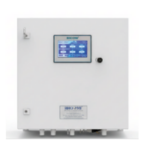
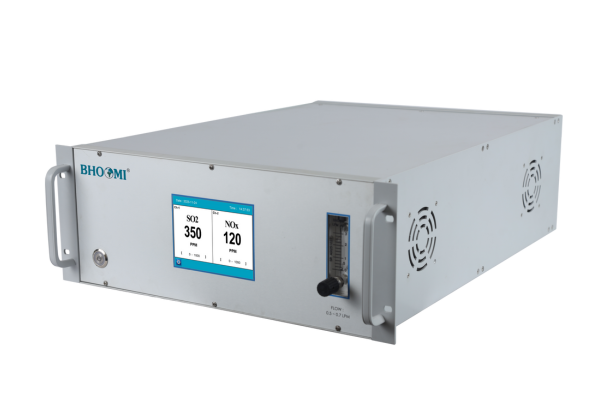
Our Agasthya 2013 Series Continuous Emission Monitoring System BI 7000 is designed to monitor key pollutants such as SO₂, NO, NO₂, CO, O₂, and CO₂. It meets stringent standards—including TÜV certification and EN15267 performance compliance. It’s fully compatible with Indian regulatory requirements:
Key benefits include:
- Continuous, real-time multi-gas monitoring with up to eight sensors
- Industrial-grade durability for harsh stack environments
- Best-in-class price-to-performance ratio
- Programmable in ppm and mg/Nm³ for flexibility
- Isolated 4–20 mA analogue outputs for each gas
- MODBUS (RS485) support for seamless integration with plant systems